
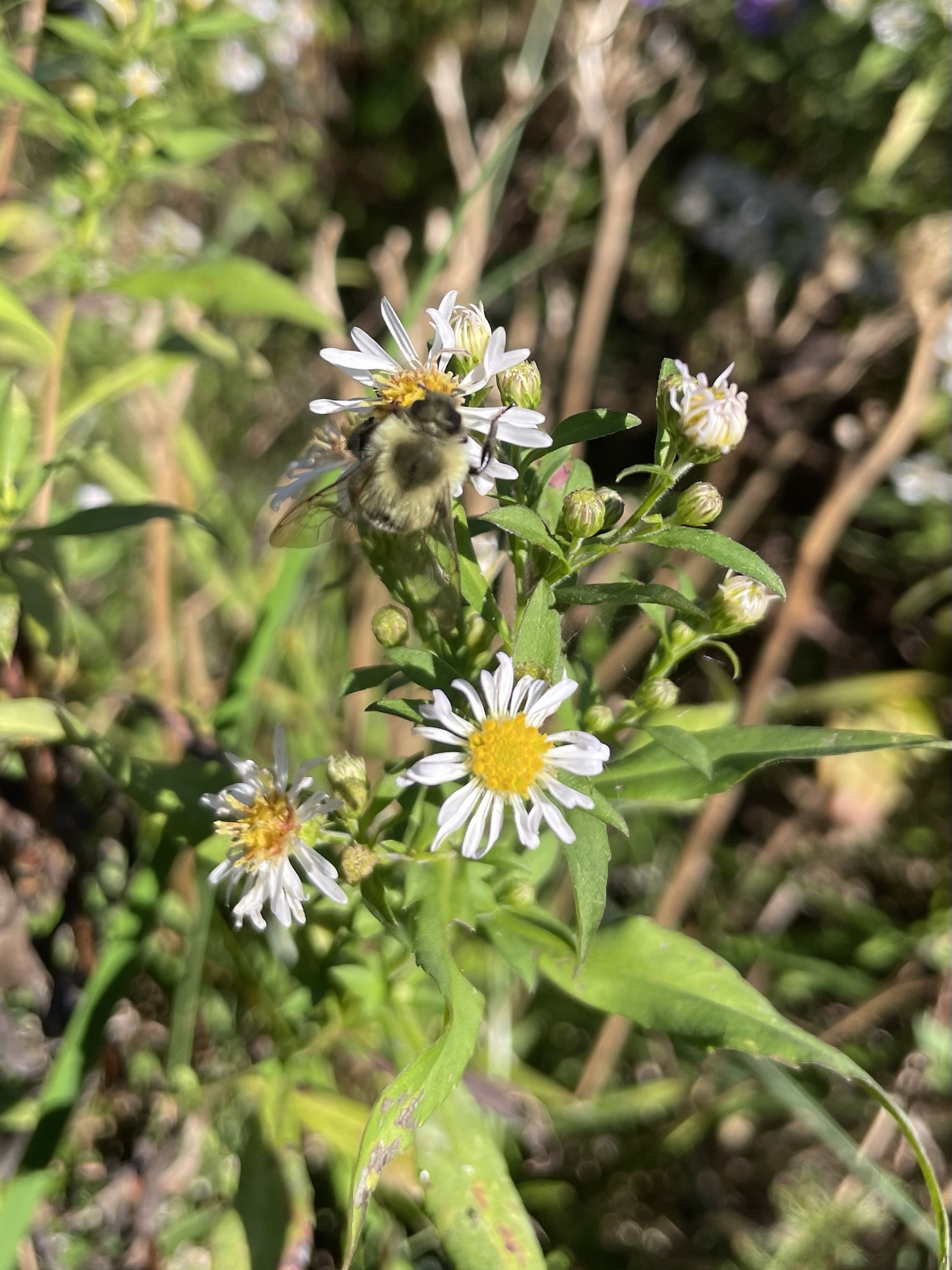
Garden census: more asters than you can shake a stick at. The garden is overtaken by asters, and for maybe the first time my yard in October is a riot of color and insects.
There is a ways to go before I can identify asters on sight. My PictureThis app identifies it as New England aster, Symphyotrichum novae-angliae.

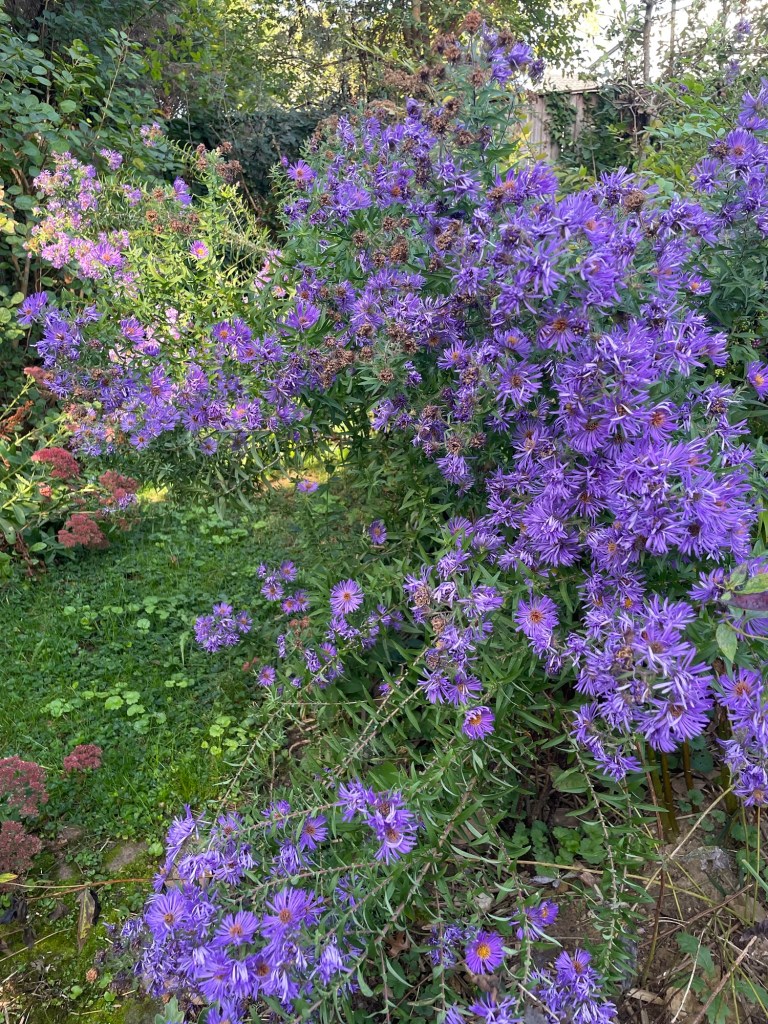
I was given a division of it by a friend a few years ago and have propagated it. I am quite sure it is now popping up on its own.
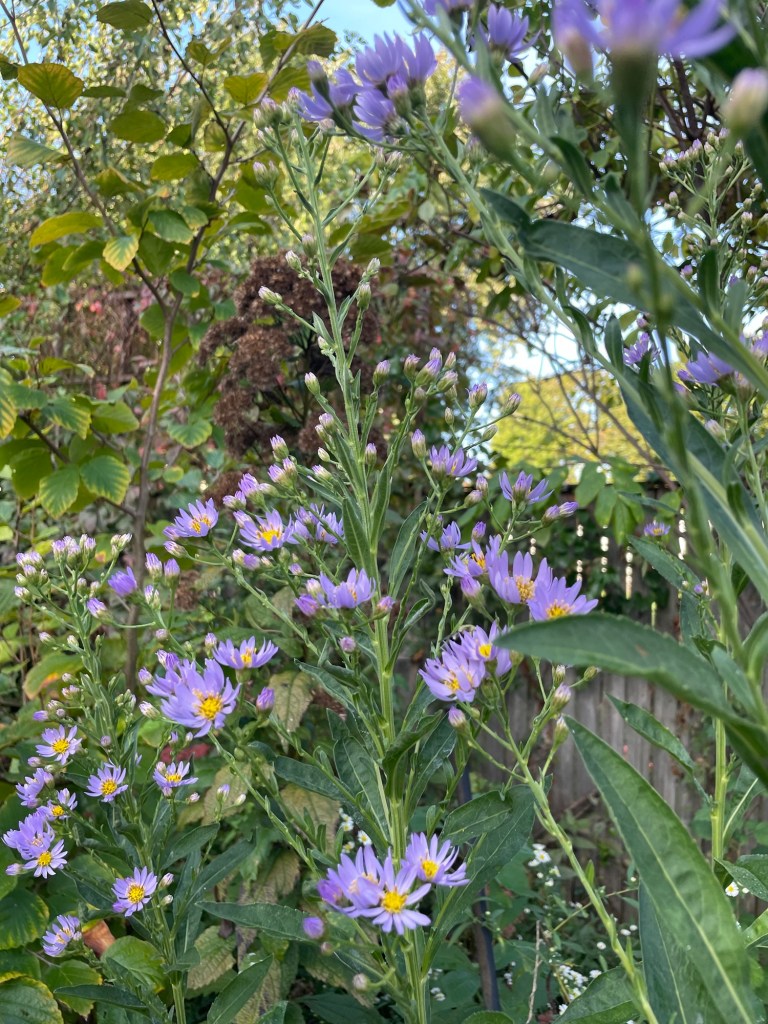
The same friend gave me a division of what I think is Aster tataricus, a non-native, strikingly tall beauty. She has stayed where I put her.
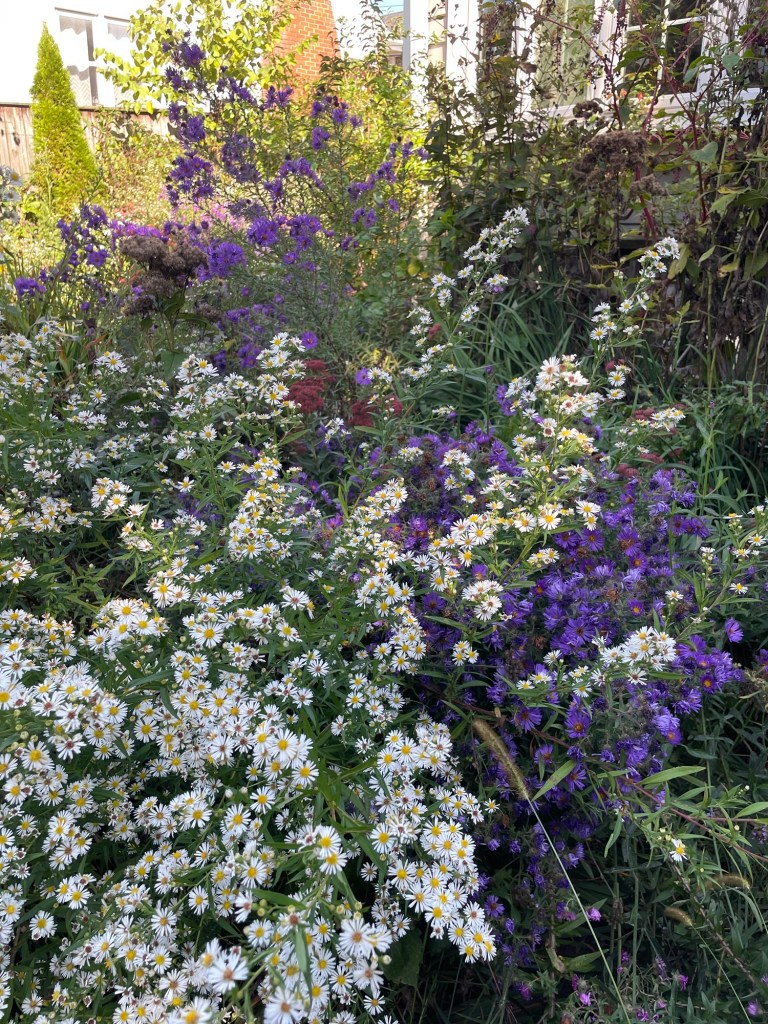
As I have stopped pulling every plant that I can’t identify as a thing I planted, white-panicle aster Symphyotrichum lanceolatum has appeared. It isn’t a graceful thing, but I do love the billowing white. I’ve seen online that you must identify white asters by the color of their pollinated flowers. I haven’t been able to see any difference, so I’ll have to keep looking.
Of all the asters in my garden – in all the plants in my garden, this is the insects’ favorite. If you stand for a moment looking at a plant you can see the whole thing move and shake under the sheer weight of insects.

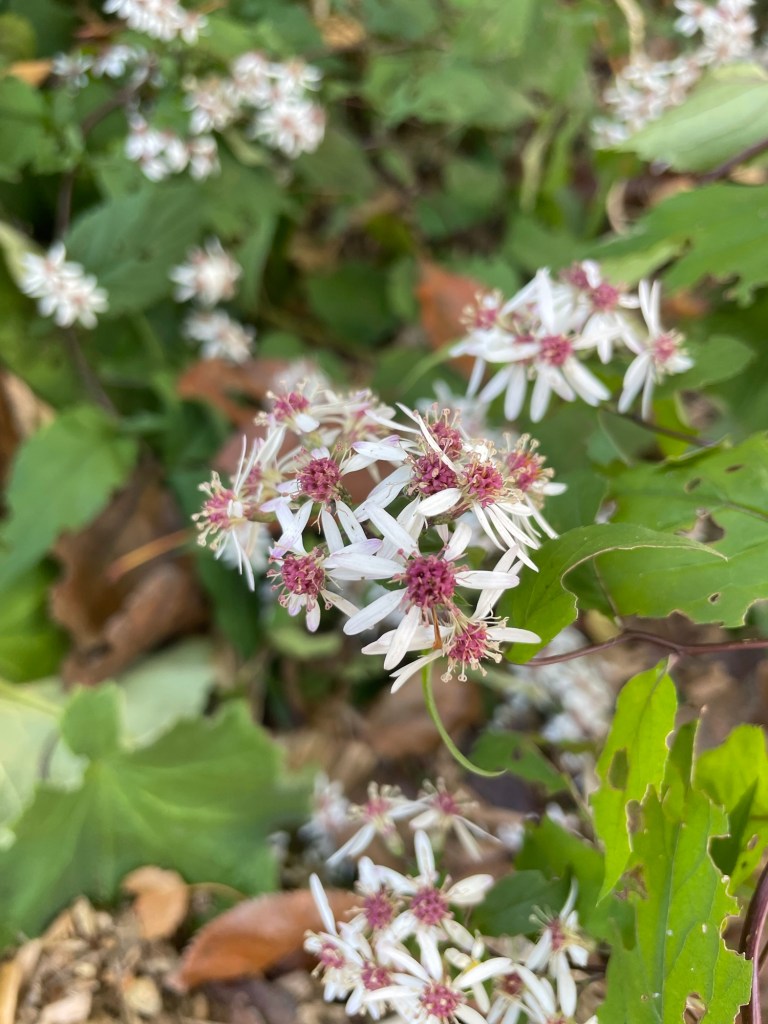
Finally, I bought and planted this little thing, white wood aster Eurybia divaricata. It has not taken off on its own, but I do like it and am helping it move around the garden. At the moment it lives (and maybe dies) along the back fence with almost no sun, and under the apple tree in front where it gets more, but maybe not enough, sunlight and water. Its stems and leaves are pretty all year long, unlike most of its kin.
So of aster types there are four. As to number of actual plants, I couldn’t say. A dozen? Two? But what makes me stand and stare, the real beauty of these plants, is the life they attract. They are so alive they quake.
We should all be so lucky.

 A Gardener's Lot